
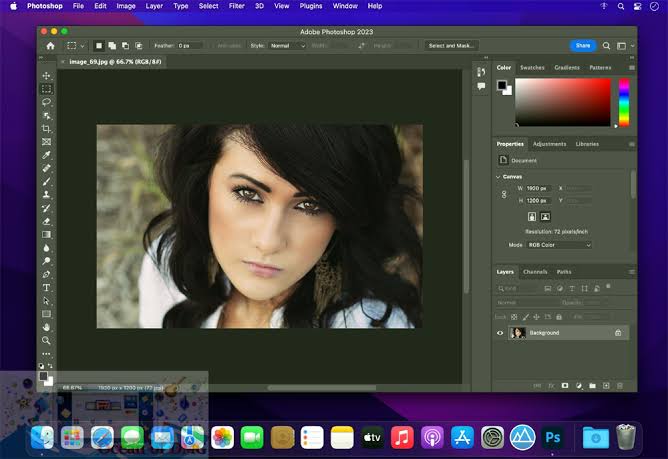
Adobe Photoshop Mac remains one of the most powerful and widely used image editing applications available for macOS. Whether you are a professional photographer, graphic designer, digital artist, content creator, or marketing specialist, Photoshop offers a complete toolkit for creating, editing, and enhancing visual content.
For decades, Adobe Photoshop has set the industry standard for photo editing and digital design. Thanks to continuous updates, Apple Silicon optimization, AI-powered tools, and seamless Creative Cloud integration, Adobe Photoshop Mac continues to be the preferred choice for creative professionals around the world.
In this review, we’ll explore its key features, latest improvements, performance on modern Macs, best alternatives, system requirements, installation process, and everything else you need to know before using Photoshop on macOS.
Key Features of Adobe Photoshop Mac
- Advanced Photo Editing Tools
- Photoshop provides professional-grade editing capabilities that go far beyond basic image adjustments.
- Users can:
- Remove unwanted objects
- Retouch portraits
- Adjust colors and lighting
- Create composites
- Enhance image quality
- Repair old photographs
- The software supports non-destructive editing, allowing users to experiment freely without permanently altering original files.
- Real-World Use Case
- Professional photographers often use Photoshop to retouch wedding photos, remove distractions from landscapes, and improve image quality before delivering projects to clients.
- AI-Powered Generative Tools
- Adobe has integrated advanced AI technologies into Photoshop.
- These tools help users:
- Generate backgrounds
- Extend images
- Remove objects automatically
- Create design variations
- Speed up repetitive tasks
- Instead of spending hours on manual edits, users can accomplish complex tasks in minutes.
- Real-World Use Case
- Content creators can quickly generate social media graphics without starting from scratch.
- Layer-Based Workflow
- Layers remain one of Photoshop’s biggest strengths.
- Users can:
- Organize complex projects
- Add effects independently
- Create advanced compositions
- Edit non-destructively
- The layer system is especially useful for designers handling large creative projects.
- Professional Design Capabilities
- Photoshop isn’t just for photo editing.
- It’s also widely used for:
- Website mockups
- UI design
- Marketing materials
- Posters
- Advertisements
- Social media graphics
- This versatility makes Photoshop a complete creative solution.
- Seamless Creative Cloud Integration
- Photoshop works seamlessly with other Adobe applications such as:
- Adobe Illustrator
- Adobe Lightroom
- Adobe InDesign
- Adobe After Effects
- Files can easily move between applications, improving productivity and workflow efficiency.
- Apple Silicon Optimization
- Adobe Photoshop Mac is optimized for Apple Silicon chips.
- Users with:
- M1 Macs
- M2 Macs
- M3 Macs
- M4 Macs
- can enjoy faster performance, better battery efficiency, and smoother multitasking.
What’s New in Adobe Photoshop Mac
Recent improvements include:
- Enhanced AI-powered editing tools
- Faster image rendering
- Improved object selection accuracy
- Better Apple Silicon support
- Workflow optimizations
- Improved cloud collaboration features
- Performance enhancements for large projects
Best Alternatives to Adobe Photoshop Mac
- Affinity Photo
- Affinity Photo is a popular alternative that offers powerful editing tools with a one-time purchase model.
- Best for:
- Budget-conscious users
- Professional photographers
- Freelancers
- Pixelmator Pro
- Pixelmator Pro is designed specifically for macOS.
- Advantages include:
- Native Mac performance
- Modern interface
- Excellent Apple Silicon optimization
- Best for:
- Mac enthusiasts
- Creative professionals
- Casual editors
- GIMP
- GIMP is a free and open-source image editing application.
- Best for:
- Beginners
- Students
- Users seeking a no-cost solution
Pros and Cons
Pros
- Industry-standard editing tools
- Excellent Apple Silicon support
- Powerful AI features
- Frequent updates
- Professional workflow capabilities
- Extensive plugin ecosystem
- Seamless Creative Cloud integration
Cons
- Subscription-based pricing
- Learning curve for beginners
- Requires significant system resources for large projects
System Requirement
- Operating System
- macOS 12 Monterey or later
- Processor
- Apple Silicon (M1, M2, M3, M4) or Intel processor
- Memory
- Minimum 8 GB RAM
- Recommended 16 GB RAM or higher
- Storage
- At least 10 GB of available disk space
- Graphics
- Metal-compatible GPU
How to Install Adobe Photoshop Mac
- Installing Photoshop on macOS is straightforward.
- Download and install Adobe Creative Cloud.
- Sign in using your Adobe account.
- Locate Photoshop within the Creative Cloud dashboard.
- Click the Install button.
- Wait for the installation process to complete.
- Launch Photoshop and begin editing.
FAQs
- ¿Está disponible Adobe Photoshop para Mac?
- Sí. Adobe Photoshop es totalmente compatible con los sistemas macOS modernos y está optimizado para Macs con procesadores Apple Silicon.
- ¿Funciona bien Photoshop en Macs de la serie M?
- Sí. Photoshop funciona excepcionalmente bien en procesadores Apple Silicon M1, M2, M3 y posteriores.
- ¿Es Photoshop adecuado para principiantes?
- Aunque requiere un periodo de aprendizaje, los principiantes pueden aprender Photoshop mediante tutoriales y práctica.
- ¿Cuáles son las mejores alternativas a Photoshop para Mac?
- Pixelmator Pro y Affinity Photo se encuentran entre las alternativas más populares para usuarios de macOS.